
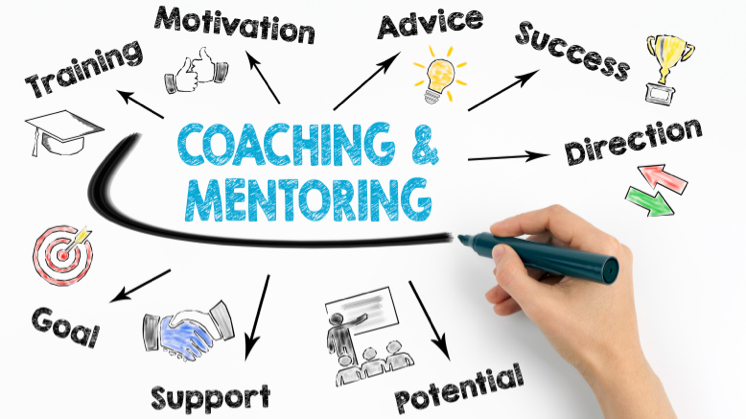

This is one of the huge issues within the [wedding] photography world right now. People call themselves a coach when they are actually training, or call themselves a mentor when they are coaching or training when they are mentoring etc.
Mentoring Coaching Training - What is the difference?
So some definitions to start with
Mentoring - A mentor is someone who shares their knowledge, skills and/or experience to help another to develop and grow.
Coaching - A coach provides guidance to a client on their goals and helps them reach their full potential.
Training - A trainer is someone who imparts a specific set of skills and knowledge during a given time frame
The words are used interchangeably by many without understanding what is actually involved and in many cases to increase the price of what they are offering! After all, calling yourself a "coach" sounds so much sexier than a "trainer" !
What is Mentoring?
Mentoring is a long-term relationship lasting months or even years or possibly lifetimes. Some of my mentees have been with me 7+ years and we still regularly get together.
You don't need any formal set of qualifications to be a mentor; though a good grasp of interpersonal communications skills is a must. By the way, I'm a Business Mentor for Business Wales - A Welsh Government initiative to help small businesses.
Mentoring is very directive. You go to a mentor with a specific question, wanting a specific answer quickly. So that means the mentor has been along the same path as you previously, be that wedding photography, floristry, cake making, automotive manufacturing etc. A mentor has a depth of knowledge about a subject because they have worked in the field for years, decades of a lifetime.
Mentoring is unstructured. You ask, they tell, and you go away and implement it. It's that simple.
A mentor needs expertise in the industry they work in and can deal with several mentees all wanting to know the same thing at the same time - it's pretty much telling them what to do.
What is Coaching?
Coaching is often a short-term process. Maybe six months or less, though I have coaches who have been with me for 7+ years. A coaching session can be a quick 10-minute conversation or a much more in-depth session lasting a couple of hours. The duration isn't essential; the outcome and outputs are.
A coach should have a formal qualification, and there are lots of them. I have a Master's level qualification via the Institute of Leadership and Management (ILM). It is highly recommended that anyone who you are looking at as a coach is qualified.
Coaching is non-directive. The coachee asks the questions the coach guides them along the path and enables them to develop themselves via insightful questions, space to think, and to gain the trust and confidence in themselves that what they are doing is the right thing for them. It certainly is not telling or training.
A coach does not need industry-specific expertise, and a coach generally works on a 1-1 basis due to the nature and complexity of the way in which people think and learn. Hence, formal qualification is essential.
Why are some of my coachees and mentees with me for so long? They value the input I give and the outputs and outcomes they get. They get value for money from me! I'm qualified in the use, and regularly use, a wide variety of psychometric assessments to help people understand themselves better, identify potential worldview blockages and help them move on and develop.
It's nearly impossible to coach on a 1-many basis (1 coach, many coaches) due to the nature of human behaviour and the non-directive approach of coaching. Add in the individual preferred method of learning (reading / theory / video / doing stuff /etc) and you soon get bogged down with people not engaging due to not being engaged. Add in online coaching for groups, and my personal opinion is that you are essentially wasting your money. That's not coaching; it's training.
What is Training?
Training is a structured programme of specific skills/knowledge development.
Training can be very directive or free-flow; depending on the learner's and the trainer's personal style and experience.
Like coaching, anyone you train with must have a training qualification. There is a reason we ensure that all teachers in schools/colleges/universities and most corporate organisations have training/teaching qualifications. (I have a degree level qualification with the Institute of Personnel and Development (CIPD) along with a vast array of global training experience in various subjects.)
It is generally trainer-led via an agenda. They have a list of topics to get through, and get through, they will! If the trainer is good, they will recognise when people are confused, not understanding etc. and involve them in the discussions. A really great trainer will have a list of topics that need to be delivered but leave the training session open to free-flow conversation so that those attending drive the subjects as and when they want and as and when questions pop into their head.
A trainer needs expertise in the subjects they are delivering.
A structured Coaching Programme?
If you are offered a structured coaching programme over a set number of months covering a predefined set of topics, with each topic being "coached" each month in that order...you are actually on a training programme. Coaching is coachee-led - they set the topics and ask the big questions, and the coach guides them. In this case, the term "coaching programme" is being used incorrectly and probably as a way to justify the price.
And if you are doing it online, you are essentially just attending a monthly training online training session. And if you are one of maybe 50+ in the session, you will rarely get the opportunity to ask questions relevant to you at the moment you need them answered.
Example
"Tonight's coaching session is going to be on using Pricing for your wedding photography". Instantly it's a training programme, and the whole series of sessions are a training programme. Why?
- What if you, as the coachee, want to know something different at the moment in time? What if your business is ok on the pricing front, but YOU need to know more about sales techniques?
- It's instructor-led - which is essentially what training is.
- You can miss the session and who cares? Not you, unless 3 months down the line you do need to think about your pricing. Then it's too late.
So you either attend the session when you don't need it, take notes but won't do it effectively and miss details because your mind is on other things or you skip it altogether and hope you can catch up someplace else. If it's been recorded, you can catch up - but you have no way of asking the questions that YOU need answering, and there lies a significant issue with pre-recorded training sessions. They are TELL only. No two-way communication. If you don't understand, you have no way of gaining understanding and thus fail to learn effectively and waste your time and possibly money.
See the difference?
Coaching is driven by you and YOUR agenda. Mentoring is driven by you and YOUR exact requirements. Training is driven by the trainers agenda
About Me and What I Do
Coaching for Wedding Photographers
I offer coaching sessions for wedding photographers. £150 per 90-minute coaching session, and we will usually have 3 or 4 sessions spread over 6 months. We have an introductory chat/discovery call, and we agree a list of areas YOU need to help with. After that, it's all driven by you. You set the time frame. You ask the big questions, and I help guide (coach!) you through. I won't make decisions for you. I will support you fully in what you do - but ultimately, the decision needs to be yours. You have to own them and the consequences.
Mentoring for Wedding Photographers
Hand in hand with the coaching often comes mentoring. You need advice there and then. So if you are on one of my coaching sets the mentoring is free. If you just want a mentor, someone who you can go to for advice as and when then I charge £25 per month with a pretty unlimited amount of mentoring as long as it's done via online messaging. Face to Face mentoring is £150 per session.
Training Workshops
I don't run portfolio days for a kick off. Hate the bloody things if all you do is turn up, get told the settings, get given the light positions, poses, modifiers etc and press the shutter. There is NO learning involved in that at all. That is something you CAN do online via a pre-recorded video!
My training sessions are business focussed and are on How to run a profitable wedding [photography] business.


0 Comments